psyside
127.0.0.1
- 4 септември 2008
- 30.500
- 31.940
psyside's setup
- Processor & Cooler
- Ryzen 5 [email protected] + PCCooler X5
- Motherboard
- Asrock B450 HDV
- Storage
- 970 EV0 Plus 500GB
- PSU
- Evga 750W BQ
- RAM
- 2x8GB Hyper X Predator@ 3200
- Video card
- Asus RTX Dual EVO 2060 Super
- Case
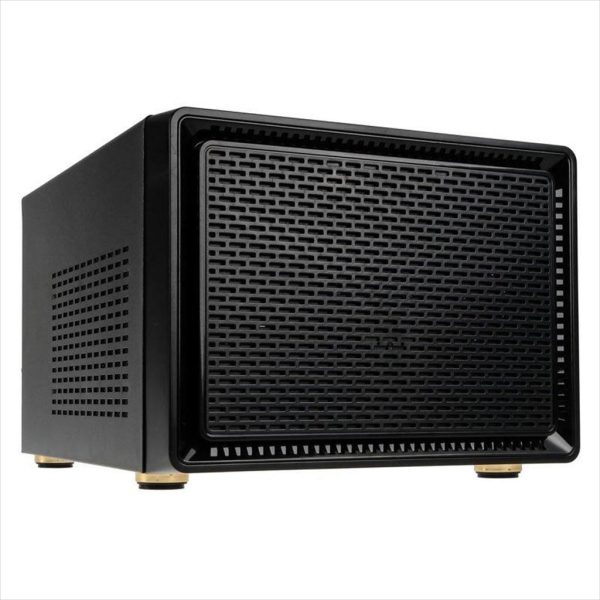
- CM Masterbox E500 with ODD
- Mouse
- Cooler Master Storm Spawn + Corsair 140/Zalman ZM-F4
- Keyboard
- Logitech G910
- Monitor
- Asus PA328Q Pro Art
- OS
- WIN 10 Pro X64
И тој ден дојде, Samsung "touchwiz" победи сток базиран ром т.е. OP5?!
Сега можам среќен да умрам, а хејтерите да и мафнат на камерата, хахахахаха кaj ќе се криете сега ama tocwiz? ; (
With the Note 8, Samsung No Longer Delivers Embarrassing Real-World Performance [Comparing Note 8, Pixel XL, OnePlus 5]

Сега можам среќен да умрам, а хејтерите да и мафнат на камерата, хахахахаха кaj ќе се криете сега ama tocwiz? ; (
With the Note 8, Samsung No Longer Delivers Embarrassing Real-World Performance [Comparing Note 8, Pixel XL, OnePlus 5]
"The OnePlus 5, once again, has the highest number of frame time spikes near the points at which our program simulates user input and scrolling. In this case, their “touch boost” succeeds at ramping the CPU frequency, but seemingly not at meeting the entirety of the workload demand in time. The Pixel XL does see jank (which we’ll be calling frames or sets of frames above the 16.6ms green line) near the user input, but frame times progressively go down immediately after, and even then the spikes are much lower than what we see on both the OnePlus 5 and the Galaxy Note 8. Keep in mind that our perception of jank or stutters is not only about how many frames miss the 16.6ms target, but also how long a single or small group of frames takes to render. For example, if we saw a frame stuck for 700ms that would go from jank to freeze.
While the Note 8 notably has fewer janky frames than the OnePlus 5 in nearly all of our tests, it is also capable of far higher frame times for individual frames, with repeated instances of the device blowing past our 50ms y-axis limit. Even then, none of these devices are “perceptibly” stuttery, with the results shown here matching the kind of scrolling performance most would deem entirely smooth.
Тhe scrolling portions are the ones that saw the smoother intervals by comparison. Loading the more complex windows (like a Play Store listing) can look perceptibly choppy in places, and I personally didn’t need any of these graphs to confirm that, but again the Note 8 performs much better than I expected. The Play Store isn’t a thoroughly lightweight application and the Note 8 does a good job at managing its transitions — at 12% jank, it had twice as many janky frames as the Pixel XL (relatively speaking, given total captured frames differ in number) and 33% less than the OnePlus 5 even though both had the same average frame time throughout the test.
The tests that we did are as close as possible as you can get to a real world performance test. We didn't use artificial benchmarks at all. We opened real apps and performed real actions that a user might do in that app.